Chameleónovité: Extraordinary Color‑Changing Lizards of the World
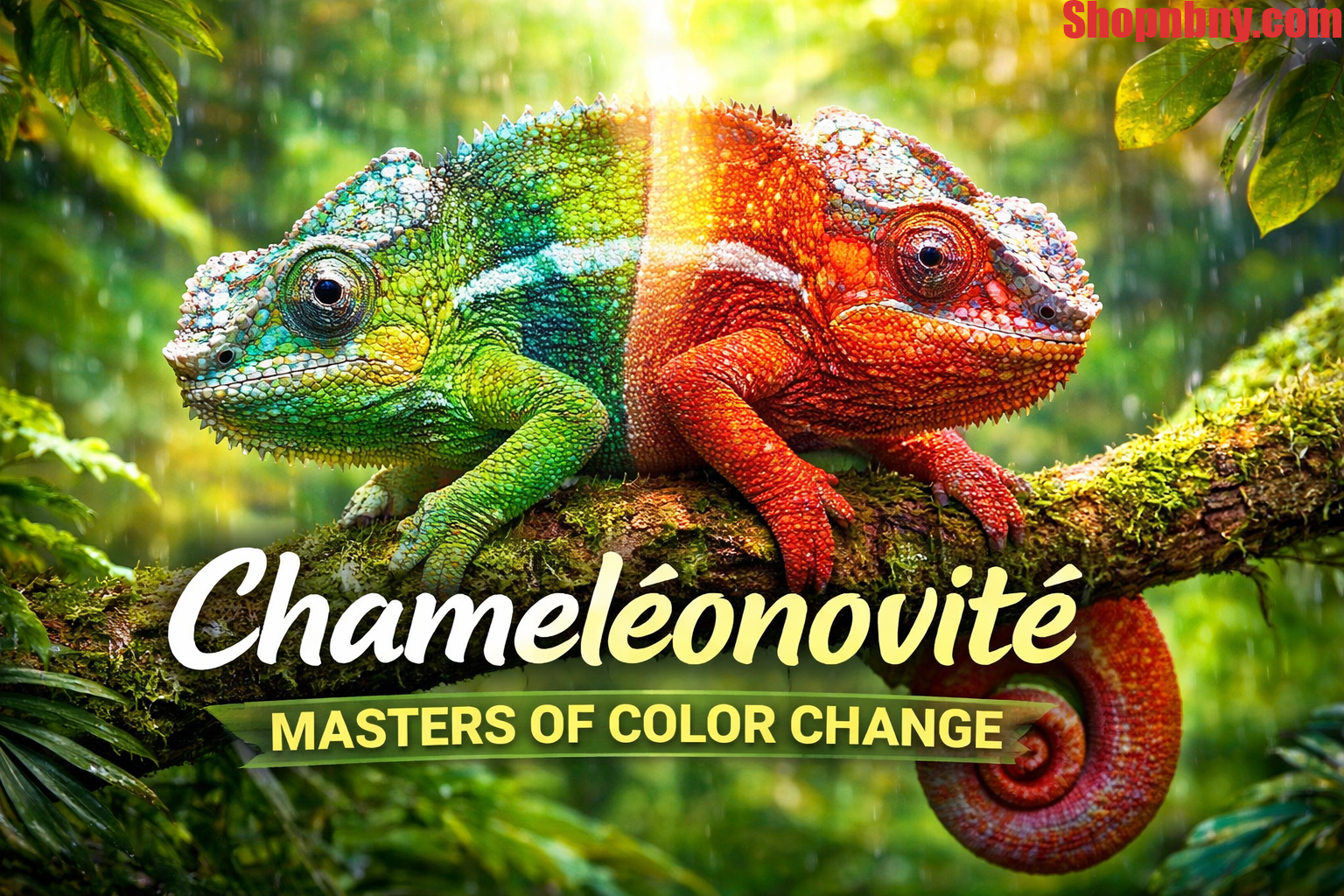
Chameleónovité — members of the reptile family Chamaeleonidae — stand among the most remarkable creatures on the planet. Famously known for their extraordinary ability to change color, these unique lizards embody many of nature’s most fascinating evolutionary adaptations. From their independently mobile eyes to their ballistic tongues, prehensile tails, and patchwork skin designed for communication and camouflage, it offer a window into the amazing complexity of life on Earth.
In this comprehensive article, we will explore everything about chameleónovité — their biology, adaptive features, behavior, habitats, taxonomy, evolution, role in ecosystems, conservation status, and even practical care for those kept as pets. By the end, you’ll have a deep appreciation for these reptiles and the crucial role they play in our understanding of evolutionary ecology.
Taxonomy and Classification of Chameleónovité
It belongs to the family Chamaeleonidae, a distinct branch of lizards within the order Squamata — the same order that includes snakes and other reptiles. Their lineage is ancient, with research indicating that they diverged early from other Old World lizard groups, adapting over millions of years to highly specialized arboreal and ground‑dwelling lifestyles.
Within the family Chamaeleonidae, several genera reflect the diversity of this group:
- Chamaeleo – Found mainly in Africa and parts of the Middle East, known for species with moderate size and vivid color change.
- Furcifer – A genus endemic to Madagascar, highlighting the island’s incredible reptile diversity.
- Calumma – Also largely Madagascar residents, many with striking crests and coloration.
- Brookesia – Often miniature species, many of which are ground‑dwellers in forest leaf litter.
- Rhampholeon – Small forest specialists in central Africa.
- Trioceros – Includes some horned varieties found across African habitats.
This classification not only reflects physical and behavioral differences but also reveals evolutionary pathways shaped by environmental pressures and geographic isolation.
Species Diversity and Geographic Distribution
There are more than 200 recognized species of chameleónovité, with ongoing discoveries as field research continues, especially in Madagascar and Africa. The island of Madagascar, in particular, is a global hotspot for chameleon diversity, hosting nearly half of all known species, many of which do not exist anywhere else on Earth.
Across Africa, it inhabits a variety of ecosystems, from dense rainforests to dry savannas and scrublands. A few species occur in limited areas of the Middle East, India, and Sri Lanka, representing the broader Old World distribution of this family.
Europe has very limited Chamaeleonidae presence, mainly through introduced populations rather than native species — a reminder that these lizards did not naturally colonize the continent but spread due to human influence.
Physical Features and Morphological Adaptations of Chameleónovité
It possesses a suite of physical traits that reflect its evolutionary adaptation to specific ecological niches, particularly arboreal environments.
Body Structure
Their bodies are typically laterally compressed, creating a flattened shape that allows them to slip through foliage and balance along narrow branches with ease. This streamlined form supports their slow, deliberate locomotion, which paradoxically often makes them more effective at stealth and camouflage.
Feet and Grip
One of the most distinctive traits of chameleónovité is their zygodactylous feet — toes fused into opposing groups that function like pincers. This unique structure enables a secure grip on branches, which is crucial for an arboreal existence.
Prehensile Tail
Their tails are not just decorative. Almost like an additional limb, the prehensile tail can wrap tightly around branches, offering balance and anchorage as the lizard moves through the trees. This adaptation is so effective that many species rarely come down to the ground.
Head Features of Chameleónovité
Many species exhibit pronounced head casques, crests, or horns. These structures vary widely and often play roles in social signaling. For example, males with larger crests or display features may be more successful in territorial disputes or mating rituals.
Skin Structure
Perhaps the most iconic trait is their ability to change skin color. This is made possible by layers of specialized cells — chromatophores and iridophores — which work in tandem to manipulate pigments and reflect light. The result is a dazzling palette of hues that can shift in response to environmental and social cues.
The Biology of Color Change
Color change in chameleónovité is not merely cosmetic; it is a complex, dynamic physiological process with multiple purposes.
Mechanism
Its skin contains two major types of light‑modulating cells:
- Chromatophores — These contain pigment and control the base colors like reds, yellows, and browns.
- Iridophores — These contain crystalline nanostructures that reflect and scatter light, producing blues, greens, and shimmering effects.
The interplay between these layers allows rapid changes in appearance. Contrary to popular belief, their color change is not solely for camouflage; it is also a form of visual communication, thermoregulation, and emotional signaling.
Functions of Color Change in Chameleónovité
| Function | Purpose |
| Camouflage | Helps the animal blend with its surroundings to avoid predators |
| Communication | Males display bright patterns to attract females or ward off rivals |
| Thermoregulation | Darker tones absorb heat, while lighter hues reflect sunlight |
| Mood and Stress | Color shifts indicate stress, excitement, or readiness to mate |
This adaptive feature is not only visually captivating but also biologically significant, showing how evolutionary pressures shape physiology for survival.
Vision and Sensory Mastery
One of the most remarkable sensory adaptations of chameleónovité lies in their eyes.
Independent Eye Movement
Each eye can move independently of the other, giving them nearly 360° vision. This allows a chameleon to scan its environment for threats and prey simultaneously without needing to move its head or body — a massive advantage in predator‑rich ecosystems.
Stereoscopic Precision
Despite the independent movement, when focused on prey, both eyes can work together for stereoscopic vision, giving accurate depth perception. This precision is essential for their signature hunting mechanism: the projectile tongue.
Hunting and Diet of Chameleónovité
They are primarily insectivorous, feeding on insects such as beetles, termites, and other arthropods. Their hunting strategy reflects patience as much as precision.
Ballistic Tongue
Their tongue mechanism is a marvel of biological engineering. Anchored deep inside the skull and supported by strong muscle and elastic collagenous tissue, the tongue can rapidly extend to capture prey at remarkable speed. In many species, the tongue can reach twice the length of the body.
Feeding Behavior of Chameleónovité
Chameleons typically remain motionless, scanning for prey with their panoramic vision. Once a target is capturable, the tongue shoots out with incredible acceleration, grabbing the prey and retracting it into the mouth in a fraction of a second.
This feeding strategy allows them to be effective predators despite their slow locomotion and relatively passive behavior.
Behavior and Social Communication
Chameleónovité are largely solitary creatures, with social interactions focused primarily around territories and mating.
Territoriality
Males are especially territorial. They use color changes, body posturing, and slow “rocking” motions to signal dominance and ward off rivals. During confrontations, the frequency and intensity of color displays can escalate dramatically.
Mating Displays of Chameleónovité
Color is also critical in mating behavior. Males often become especially vibrant during courtship, while females may display subdued signals or specific patterns indicating receptivity.
Stress and Mood Signals
Even subtle color changes — such as darkening when stressed — illustrate how deeply connected their visual system is to internal states.
Habitat and Ecological Role of Chameleónovité
They are found in a wide range of terrestrial habitats:
- Rainforests
- Savannas
- Shrubby bushlands
- Sparse or semi‑arid woodlands
Their arboreal lifestyle makes them essential components of forest and shrub ecosystems. They help control insect populations and serve as food for birds, snakes, and smaller mammalian predators.
Ground‑Dwelling Species
While most species are arboreal, some — especially in the genus Brookesia — are adapted to life among leaf litter on the forest floor. Their small size and cryptic coloration help them blend with fallen leaves, illustrating yet another ecological niche filled by chameleónovité.
Evolution and Phylogeny
Evolutionary studies of chameleónovité reveal how adaptive features arose over millions of years. Fossil records, combined with molecular phylogenetics, show that:
- Prehensile tails and grasping feet evolved to support arboreal lifestyles.
- The ballistic tongue and visual sophistication co‑evolved as advanced predatory tools.
- Madagascar’s geographic isolation encouraged the rapid diversification of species within the island, leading to many endemic lineages.
This evolutionary history underscores the adaptive success of chameleónovité as they filled ecological niches across diverse landscapes.
Conservation Status of Chameleónovité
Despite their evolutionary success, many chameleon species are now under threat.
Major Threats
- Habitat loss and deforestation
- Agricultural expansion
- Climate change
- Illegal wildlife trade
Several species are listed as vulnerable, endangered, or critically endangered on conservation lists due to shrinking habitats and pressure from collecting for the exotic pet trade.
Conservation Efforts of Chameleónovité
Protecting chameleons involves:
- Habitat conservation and reforestation programs
- Legal protections and international trade regulations
- Education and community engagement to reduce demand for wild‑caught pets
Safeguarding these lizards also protects broader ecosystems, since they are integral parts of food webs and environmental balance.
Chameleónovité as Exotic Pets
Their striking appearance makes chameleónovité popular in the reptile pet trade. However, caring for these animals requires expertise and commitment.
Key Care Requirements
- Temperature gradients
- High humidity and proper ventilation
- UVB lighting
- Live insect diet
- Climbing structures and arboreal enclosure design
Captive chameleons thrive best when their environment closely mimics natural conditions. Stress from improper care can lead to health issues and shortened life spans.
Responsible Pet Ownership
To protect wild populations, enthusiasts should only source pets from reputable breeders and avoid supporting illegal capture.
Fun Facts and Unique Traits
- Some chameleónovité species can display over 20 distinct colors.
- Brookesia nana is among the smallest reptiles in the world.
- Their tongue can accelerate faster than many mechanical systems.
- Some species exhibit sexual dimorphism with remarkable patterns only in males.
Conclusion
Chameleónovité are among the most fascinating reptiles on Earth, embodying nature’s ingenuity through their color‑changing skin, sensory systems, hunting techniques, and adaptive behaviors. From their ancient evolution to the threats they face today, they offer profound insights into how life adapts to survive and flourish in a diverse range of environments.
Protecting these reptiles goes beyond saving charismatic animals — it preserves ecological balance, biodiversity, and the intricate tapestry of life on our planet. Whether encountered in the wild, studied in science, or cherished responsibly in captivity, it reminds us of the wonder and complexity of the natural world.














Post Comment