Delta Flight DL275 Diverted LAX: A Detailed Analysis
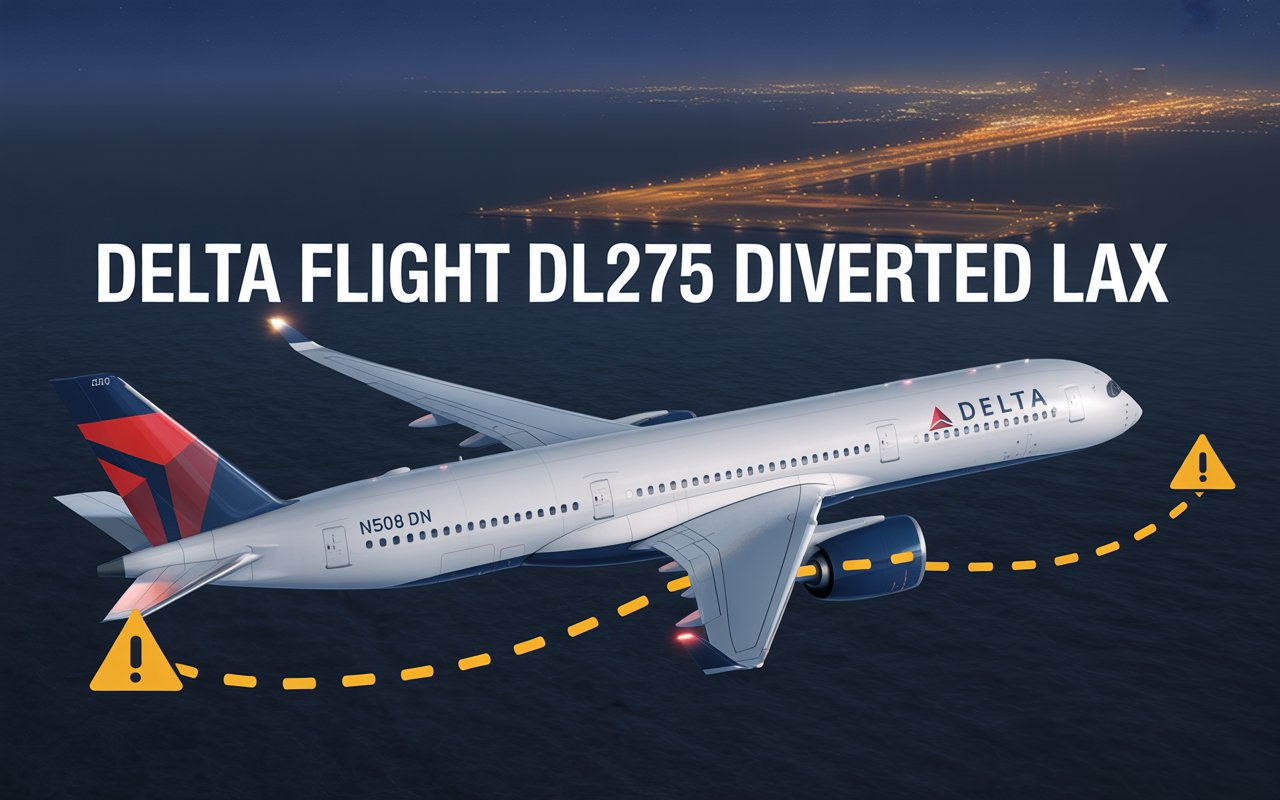
Delta Flight DL275 Diverted LAX, a major international route operated by Delta Air Lines, connects Detroit Metro Airport (DTW) with Tokyo Haneda (HND). The flight, typically lasting around 12–13 hours, uses the advanced Airbus A350-900, registration N508DN, which is valued for its fuel efficiency, passenger comfort, and cutting-edge safety systems. The route is particularly important for business travelers, tourists, and international commerce, making any disruption noteworthy.
On May 27, 2025, Delta Flight DL275 diverted to LAX after encountering an engine anti-ice system malfunction while flying over the North Pacific. Though the flight continued safely, the unexpected diversion drew attention from aviation enthusiasts, passengers, and industry analysts alike. Estimates indicate the operational and passenger-related costs of the diversion reached approximately $2.3 million.
Flight Background and Pre-Flight Context of Delta Flight DL275 Diverted LAX
Flight Schedule
Delta Flight DL275 departed Detroit Metro Airport (DTW) at 15:53 local time after a delayed arrival of its aircraft from Amsterdam (DL133), which touched down just 46 minutes before the scheduled departure. Over 300 passengers were on board, ranging from business travelers to tourists.
Aircraft Readiness
The Airbus A350-900, tail number N508DN, is one of Delta’s newest long-haul aircraft. It is equipped with Rolls-Royce Trent XWB engines, which include engine anti-ice systems designed to prevent ice accumulation during flights over cold regions. Pre-flight inspections and routine maintenance had been performed, and the aircraft was certified for ETOPS operations, allowing safe extended-range flights over remote oceanic areas.
Flight Planning
The planned route spanned the North Pacific, crossing over Alaska and the Bering Sea before reaching Tokyo. Extensive planning went into fuel calculations, alternate airport selection, and crew duty scheduling. Such preparations are standard for long-haul operations, but they also ensure that flights like DL275 have pre-determined diversion options in case of technical issues, medical emergencies, or weather-related concerns.
Timeline of Delta Flight DL275 Diverted LAX
Takeoff and Initial Flight
DL275 departed Detroit on schedule, climbing to a cruising altitude of 38,000 feet. The initial stages of the flight were uneventful, and passengers settled into the long-haul journey.
Detection of Engine Anti-Ice Issue
Approximately five to six hours into the flight, about 620 nautical miles southwest of Anchorage, the flight crew detected a malfunction in one of the Rolls-Royce Trent XWB engines’ anti-ice systems. This system is vital for preventing ice accumulation on engine inlets and fan blades, which could otherwise disrupt airflow and compromise engine performance.
Decision to Divert
Recognizing the potential risk of continuing over the remote Pacific Ocean, the flight crew consulted Delta’s Operations Control Center and determined that Los Angeles International Airport (LAX) was the safest diversion option. The flight path was adjusted accordingly, adding roughly five extra hours of flight time.
Landing at LAX
Delta Flight DL275 Diverted LAX safely landed on Runway 06R at LAX at approximately 01:08 AM local time on May 28, 2025. There were no injuries, and the aircraft remained in the air for 12 hours and 15 minutes in total.
Technical Analysis: Engine Anti-Ice System
Function
The engine anti-ice system is designed to prevent ice from forming on engine components during high-altitude, cold-weather flights. It uses hot bleed air from the engine to heat nacelles, inlets, and fan blades, maintaining smooth airflow and preventing potential engine damage.
Signs of Malfunction
In the case of DL275, the system showed abnormal readings, including reduced airflow, decreased bleed air pressure, slower valve response, and lower-than-normal temperatures. If unaddressed, these issues could have caused engine inefficiency or power loss.
Safety Redundancy of Delta Flight DL275 Diverted LAX
The Airbus A350 and Rolls-Royce Trent XWB engine are equip with multiple fail-safes. Despite these redundancies, the severity of the anti-ice malfunction warranted an immediate diversion to ensure passenger and crew safety.
Manufacturer and Regulatory Protocols
Airbus and Rolls-Royce provide clear maintenance and operational protocols for handling engine anti-ice system faults. The FAA and international aviation regulators mandate strict safety measures, ensuring flights are divert when critical systems show anomalies—even if an immediate emergency is not present.
Why Delta Flight DL275 Diverted LAX Was Chosen for Diversion
Technical Infrastructure
LAX is a Delta TechOps hub, equipped with A350-certified mechanics, Rolls-Royce engineers, and specialized spare parts. This made it the most suitable airport for safely handling the issue on DL275.
Passenger Logistics
As a major international hub, LAX provides efficient rebooking options, hotels, and transport services, allowing Delta to care for hundreds of passengers simultaneously.
Emergency Preparedness
Long runways capable of supporting fully loaded widebody aircraft, favorable weather, and on-site emergency services made Delta Flight DL275 Diverted LAX the safest diversion choice, even compared to closer airports like Anchorage or Seattle, which lack full technical capabilities for the A350.
Passenger Experience
Onboard Communication
The cabin crew remained calm, professional, and informative, explaining the precautionary nature of the diversion. Passengers were reassure that safety, not emergency, was driving the decision.
Post-Landing Support
After landing, Delta Flight DL275 Diverted LAX provided hotel accommodations, meal vouchers, transport, and rebooking assistance. The airline’s rapid response earned praise from passengers and industry observers alike.
Social Media and Public Reaction
On platforms such as Reddit, X (formerly Twitter), and Instagram, hashtags like #DL275 and #DeltaDivertedLAX trended as passengers shared their experiences. Most feedback highlighted crew professionalism and transparency, reinforcing confidence in Delta’s operational safety culture.
Emotional Impact
Although passengers experienced stress from the diversion and missed connections, many expressed appreciation for the safety-first decision-making, recognizing that precaution outweighed inconvenience.
Operational and Financial Impact
The diversion of Delta Flight DL275 Diverted LAX had significant operational and financial consequences for Delta Air Lines. While the safety of passengers and crew remained the top priority, the event illustrates the tangible costs and ripple effects of emergency diversions on airline operations.
Direct Costs
Several direct operational expenses were incurred due to the unexpect diversion:
| Cost Item | Description | Estimated Cost (USD) |
|---|---|---|
| Additional Fuel | Extra fuel required due to mid-Pacific diversion | $180,000 |
| LAX Landing and Handling Fees | Standard landing and ground handling charges at Los Angeles International | $12,000 |
| Maintenance and Inspections | On-ground diagnostics and technical checks of the A350-900 anti-ice system | $95,000 |
| Crew Overtime and Hotel Stays | Additional expenses for crew working beyond scheduled duty hours | Standard landing and ground handling charges at the Los Angeles International Airport |
Passenger-Related Costs of Delta Flight DL275 Diverted LAX
Passengers were directly impact by the diversion, requiring Delta to provide support and compensation:
- Rebooking Passengers: Approximately $85,000 was spent arranging alternative flights to Tokyo or connecting hubs.
- Hotels and Meals: Food vouchers and overnight accommodations for international travelers totaled about $50,000.
- Legal Compensation: Under the delay and cancellation policies, Delta provided around $41,000 in compensation.
Revenue Loss
The diversion also affected revenue streams:
- Flight Segment Cancellation: The Tokyo leg of DL275 was canceled, resulting in lost business and economy class fares.
- Cargo Revenue: Goods scheduled to be transported on the flight were delayed or rerouted, affecting logistical commitments.
Total Estimated Cost: Combining direct, passenger-related, and lost revenue, the event is estimated to have cost Delta approximately $2.3 million.
Network Impacts
- Aircraft Out of Service: Tail number N508DN remained grounded at LAX for inspections and repairs, temporarily reducing fleet availability.
- Ripple Effects: Subsequent flights in Delta’s Pacific network experienced minor delays or aircraft substitutions, demonstrating how a single diversion can affect broader operations.
Predictive Maintenance and Technology of Delta Flight DL275 Diverted LAX
The incident underscores the potential of predictive maintenance and modern technology in preventing similar in-flight disruptions.
Engine Health Monitoring
The Rolls-Royce Trent XWB engines on the Airbus A350-900 are equipped with real-time sensors that continuously monitor performance, detecting anomalies in airflow, bleed air pressure, valve response, and temperature.
AI and Predictive Analytics
Advanced AI systems can analyze flight data to detect patterns hours or even days before a potential failure occurs. Tools such as Airbus Skywise and Rolls-Royce TotalCare allow maintenance teams to act proactively, reducing the risk of in-flight emergencies and unscheduled diversions like that of DL275.
Industry Implications
- Shift from reactive maintenance (repair after failure) to proactive maintenance (predictive fixes).
- Improved operational efficiency, fewer flight disruptions, and enhanced passenger safety.
- Airlines can better plan crew schedules, aircraft rotations, and spare part logistics.
Aviation Safety Lessons
Delta Flight DL275 Diverted LAX provides a real-world example of safety protocols and risk management in action.
Safety Culture
The decision to divert demonstrates the aviation industry’s “safety first” philosophy. Continuing the flight with a compromised anti-ice system was considered riskier than adding extra air time to reach a fully equipped hub.
Crew Training and Protocols
Pilots and cabin crew followed well-established procedures, preventing panic and maintaining passenger confidence. Clear communication and professionalism ensured a calm in-flight environment.
Communication Protocol
- Onboard Announcements: Passengers were informed in real-time about the nature of the diversion.
- Airline Apps: Updates on flight status and rebooking options were available via Delta’s travel apps, enhancing transparency.
Airport Coordination
Efficient collaboration with LAX allowed for swift gate allocation, emergency readiness, and passenger support, highlighting the importance of airport-airline coordination in managing long-haul diversions.
Media and Industry Reactions
Coverage
The diversion of Delta Flight DL275 Diverted LAX quickly gained attention from aviation media, blogs, and real-time flight tracking websites. It was analyzed as a case study for in-flight decision-making, crew training, and operational efficiency.
Lessons for Passengers about Delta Flight DL275 Diverted LAX
The DL275 diversion provides practical lessons for air travelers, especially on long-haul flights:
Preparation
- Keep passports, phone chargers, medications, and essential items accessible.
- Be aware of airline apps for real-time updates and rebooking.
Stay Calm
- Follow crew instructions carefully.
- Understand that diversions prioritize safety over convenience.
Flexibility
- Expect delays, diversions, or schedule changes.
- Appreciate the precautionary measures taken to ensure passenger safety.
Conclusion
Delta Flight DL275 Diverted LAX after the detection of an anti-ice system malfunction in its Rolls-Royce Trent XWB engine over the North Pacific. The Airbus A350-900 landed safely at LAX at 01:08 AM on May 28, 2025, with no injuries reported. Crew professionalism, airport readiness, and operational coordination ensured minimal disruption.
- Safety over schedule: Diversions are essential when critical systems are compromised.
- Predictive technology matters: AI and real-time monitoring can prevent incidents before they occur.
- Communication builds trust: Clear updates onboard and via apps maintain passenger confidence.
The DL275 diversion demonstrates the complexity and resilience of modern aviation. It highlights how airlines, crews, and airports work together to manage emergencies effectively. For passengers, it reinforces that safety is always the primary concern, and for the industry, it sets a benchmark for handling unexpected diversions efficiently and professionally.
FAQs About Delta Flight DL275 Diverted LAX
Why was Delta Flight DL275 diverted to LAX?
It was diverted due to a malfunction in the engine anti-ice system, which posed a safety risk over the Pacific.
Were there any injuries?
No, all passengers and crew landed safely.
How long was the flight?
About 12 hours and 15 minutes, including the diversion.
Why LAX instead of closer airports?
LAX has Delta maintenance, Rolls-Royce engineers, long runways, and passenger support facilities.
How were passengers assisted?
Delta provided hotels, meals, transport, and rebooking on alternative flights.
Could AI or predictive maintenance prevent this?
Yes, AI could detect engine issues before takeoff, preventing such diversions.











Post Comment