Repmold: Manufacturing with Precision, Speed, and Sustainability
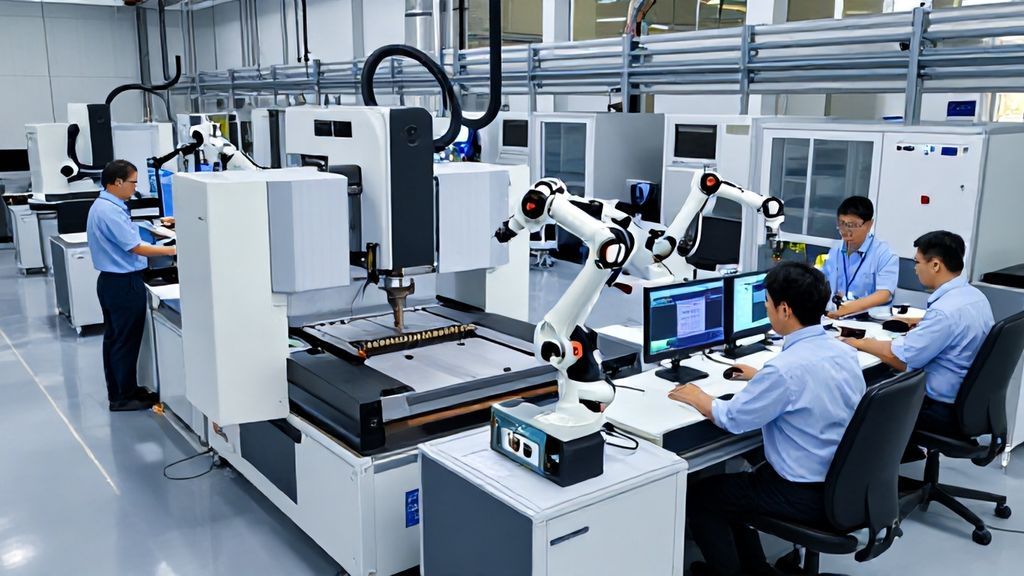
Repmold is revolutionizing the manufacturing landscape. With rising consumer demands, shortened product life cycles, and increasing environmental concerns, innovation is no longer optional—it’s essential. Traditional manufacturing methods, while proven, often struggle to deliver speed, accuracy, and eco-conscious practices all at once.
Enter a transformative approach to modern production. Combining cutting-edge technology with eco-conscious principles, it streamlines the manufacturing process while ensuring high-quality outcomes. Whether for businesses seeking efficiency or consumers demanding sustainable products, it represents a game-changing solution in the industry.
What is Repmold?
Definition and Core Concept
It is a specialized manufacturing system that integrates CNC machining, rapid prototyping, and low-volume production into a seamless workflow. Its core principle revolves around three pillars: precision, repeatability, and eco-conscious design.
Unlike traditional mold-making, it leverages digital intelligence, automation, and circular economy principles to optimize production. This allows manufacturers to produce consistent parts with minimal errors, reduced material waste, and faster turnaround times.
Key Terminology and Industry Relevance
- CNC Machining: Digitally controlled subtractive manufacturing process ensuring tight tolerances.
- Rapid Prototyping: Accelerated creation of functional prototypes directly from digital models.
- Low-Volume Production: Controlled manufacturing of small batches or pilot runs to validate designs.
Repmold is highly relevant across multiple industries, from automotive to medical devices, where precision, speed, and sustainability are paramount.
History and Evolution of Repmold
Early Mold-Making Methods and Limitations
Traditionally, molds were crafted manually, often resulting in inconsistencies, slow production cycles, and higher costs. Early techniques required extensive labor and repeated adjustments to meet quality standards.
Transition to Digital Design Tools
With the advent of CAD (Computer-Aided Design) and CAM (Computer-Aided Manufacturing) systems, designers could now visualize, simulate, and optimize molds digitally. This reduced errors, minimized material waste, and improved overall efficiency.
Introduction of AI-Driven Optimization and Hybrid Manufacturing
Modern systems integrate AI-based simulations with additive and subtractive manufacturing, combining 3D printing for complex shapes and CNC machining for high precision. This hybrid approach allows for faster iteration and higher-quality outcomes.
Shift to Agile, Sustainable Manufacturing
Repmold moves away from mass production toward low-volume, agile manufacturing. By integrating sustainability into the workflow, it supports environmentally responsible production without sacrificing performance.
Core Technologies and Processes
CNC Machining
CNC machining is the backbone of it. By using multi-axis milling and CNC turning, manufacturers achieve tight tolerances, consistent dimensions, and smooth finishes. Digitally programmed toolpaths derived from CAD files ensure each component aligns perfectly with design intent.
Rapid Prototyping
Rapid prototyping accelerates the design phase by producing functional prototypes directly from digital models. Components can be tested for mechanical performance and assembly fit without permanent tooling, saving both time and resources.
Additive & Subtractive Manufacturing
It combines 3D printing for creating intricate geometries with CNC machining for precision finishing. This dual approach allows the production of complex molds that traditional techniques cannot achieve efficiently.
AI and Simulation
Artificial intelligence enhances Repmold by predicting mold performance, optimizing stress distribution, and simulating heat and material behavior. Continuous feedback ensures higher accuracy and fewer production errors.
Low-Volume Production
It supports controlled batch manufacturing, enabling pilot programs, pre-production validation, and small-batch runs. Archived machining programs ensure repeatability, bridging the gap between prototype testing and full-scale production.
Material Capabilities of Repmold
Metals
- Aluminum: Lightweight structural components
- Carbon Steel: High-strength applications
- Stainless Steel: Corrosion-resistant parts
- Brass and Copper: Conductivity and machinability
Plastics
- ABS: Impact-resistant parts
- Acetal: Tight-tolerance mechanical components
- Nylon: Wear-resistant parts
- Polycarbonate: Transparent and tough components
- PEEK: High thermal and chemical stability
Selecting the right material ensures functional performance, durability, and compatibility with end-use conditions, critical for reliable product manufacturing.
Industrial Applications
Automotive
Repmold accelerates the prototyping and production of engine parts, dashboards, and interiors, reducing tooling errors and speeding innovation cycles.
Aerospace
Lightweight, high-precision components are essential in aerospace. Repmold produces molds that withstand extreme conditions while maintaining tight tolerances.
Medical Devices
From surgical instruments to implants, it ensures components meet regulatory and patient-specific requirements with consistent quality.
Consumer Electronics
Customized casings, connectors, and housings are produced efficiently, allowing fast iteration and diverse product offerings.
Robotics & Industrial Equipment
Precision mechanical systems and assemblies benefit from their repeatable and reliable manufacturing.
Consumer Products
It supports controlled production runs and low-volume deployments, perfect for startups and limited edition products.
Repmold for Product Engineering
Supporting Early-Stage Design Validation
It enables engineers to validate geometries and assembly fit before investing in costly tooling.
Functional Testing of Components
Engineers can confirm mechanical behavior under load and verify part performance using production-grade materials.
Assembly Fit and Tolerance Stack-Up Verification
Repmold ensures precise alignment and proper tolerances, reducing rework and design errors.
Benefits for Engineering Teams
- Risk Reduction: Fewer costly mistakes during development
- Enhanced Accuracy: Digital and automated processes ensure consistency
- Faster Development: Rapid prototyping and low-volume runs accelerate product iteration
Quality Control and Production Standards of Repmold
Ensuring Consistency Across Orders
Quality control is a cornerstone of it. By integrating digital measurements and standardized processes, each component meets the required specifications, reducing variability across production runs.
Inspection Tools and Methods
- Calipers and Micrometers: For dimensional accuracy
- Coordinate Measuring Machines (CMM): High-precision measurement of complex parts
- Visual Inspection and Surface Analysis: Ensuring finishes meet industry standards
Documentation and Traceability
All inspection results are recorded and tracked, providing full traceability. Any deviation triggers corrective actions, ensuring continuous improvement and reliability in production.
Sustainability and Environmental Impact
Circular Economy Principles
Repmold emphasizes recycling and reusing materials, reducing waste and conserving resources. By transforming discarded components into new production-ready materials, it closes the loop on industrial material usage.
Energy Efficiency and Reduced Waste
Digital design and AI-driven optimization allow precise material utilization, minimizing scrap. Shorter machine cycles and efficient processes also reduce energy consumption.
Supporting ESG Goals
Manufacturers adopting Repmold contribute to environmental, social, and governance (ESG) objectives, appealing to eco-conscious consumers while improving operational efficiency.
Advantages for Businesses and Consumers
Cost Reduction
By using recycled materials and minimizing waste, businesses lower raw material expenses. Automation reduces labor costs and accelerates production cycles, resulting in faster returns on investment.
Accelerated Product Development
Rapid prototyping and low-volume production allow companies to test, iterate, and refine designs quickly, shortening time-to-market and fostering innovation.
Customization Potential
The flexibility of its processes enables companies to create personalized or limited-edition products, responding to specific market or consumer needs without major tooling changes.
Brand Reputation
Adopting sustainable manufacturing practices enhances a company’s image. It showcases commitment to environmental responsibility, attracting eco-conscious consumers and partners.
Challenges and Limitations of Repmold
High Initial Investment
Implementing it requires investment in digital machinery, software, and operator training, which may deter some businesses initially.
Scalability Concerns
While small and medium-sized operations benefit greatly, large-scale manufacturers may face challenges integrating it across multiple production lines.
Quality Control Complexity
Integrating innovative materials and advanced processes may make consistent quality assurance more demanding, requiring skilled personnel and robust protocols.
Consumer Awareness
Educating the market about sustainable manufacturing methods like Repmold is essential for adoption, as many customers are still unfamiliar with these processes.
Government Role and Regulatory Influence
Policy and Incentives
Government regulations and incentives play a pivotal role in promoting sustainable manufacturing. Subsidies for renewable energy and eco-friendly equipment can accelerate its adoption.
Compliance and Operational Efficiency
Environmental regulations encourage businesses to adopt innovative technologies. Compliance with these standards often enhances efficiency while reducing environmental impact.
Collaboration for Innovation
Joint initiatives between industry, researchers, and governments support R&D for it , ensuring continuous improvement and broader adoption across sectors.
Future Trends in Repmold
Industry 4.0 Integration
It aligns with smart factories and IoT-connected production, allowing real-time monitoring and optimization of mold performance.
Autonomous and AI-Driven Manufacturing
AI will enable molds to self-adjust based on performance and environmental conditions, leading toward fully autonomous production lines.
Mass Personalization
It supports customized manufacturing at scale, enabling consumer-specific products without sacrificing efficiency or cost-effectiveness.
Expansion into New Industries
As technologies mature, Repmold is expected to expand into consumer goods, robotics, and even advanced aerospace applications, further demonstrating its versatility.
Case Studies and Real-World Examples
Automotive Supplier Success
A mid-sized automotive company adopted Repmold to replace outdated tooling methods, reducing mold production time by 50% and cutting costs by 35%. The improved workflow enhanced design flexibility and ensured consistent quality across all batches.
Medical Device Startup
A medical innovation startup leveraged it for rapid prototyping of surgical instruments, completing three iterations in one month while maintaining regulatory compliance. This accelerated product development and demonstrated the system’s reliability.
Consumer Electronics
Electronics manufacturers used it to produce precise casings and connectors, enabling faster iteration cycles and consistent product performance across short and medium production runs.
Conclusion:
It represents a paradigm shift in manufacturing, combining precision, speed, and sustainability in a single system. Its integration of CNC machining, rapid prototyping, low-volume production, and AI-driven optimization ensures high-quality, repeatable results while supporting environmental responsibility.
Businesses adopting Repmold gain competitive advantages through faster development cycles, reduced waste, cost efficiency, and improved brand reputation. Consumers benefit from eco-friendly products that meet high standards of quality and durability.
As governments, industries, and consumers increasingly prioritize sustainability, it stands at the forefront of green manufacturing innovation. Its adoption marks a step toward smarter, more responsible production—a future where efficiency and environmental stewardship go hand in hand.











Post Comment