ThrustSSC: The First Supersonic Land Vehicle and Its Historic Achievement
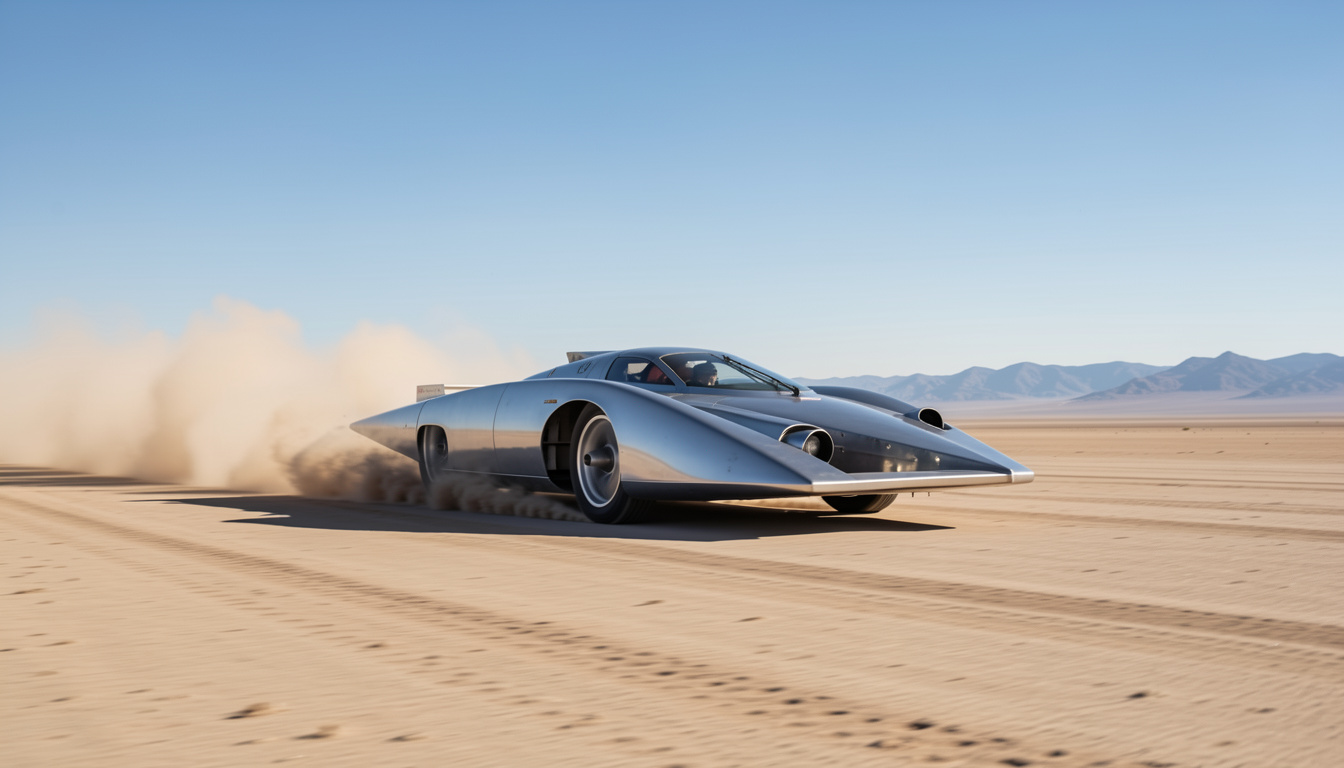
ThrustSSC has long been recognized as a groundbreaking achievement in the pursuit of speed. Speed has been one of humanity’s most compelling pursuits — from the first wheel to the fastest airplanes. Among all extremes of velocity, breaking the speed of sound on land has stood as one of the boldest engineering challenges ever tackled. In October 1997, the British‑built Thrust SuperSonic Car did just that — it became the first land vehicle in history to officially exceed the speed of sound.
The Quest for Supersonic Speed on Land
Historical Background
The pursuit of high speeds on land accelerated dramatically in the 20th century, especially as engines became more powerful and materials stronger. Early land‑speed vehicles — such as Sir Malcolm Campbell’s Bluebird cars — progressively climbed closer to the 1000 km/h threshold, each breaking records with innovative engineering for their era.
By the 1980s, the British team behind Thrust2 pushed the world land speed record past 1,000 km/h, laying the groundwork for the next logical challenge: breaking the sound barrier on land.
Why Supersonic Land Speed Is Difficult for ThrustSSC
Unlike aircraft, which travel in open air where aerodynamic lift helps balance forces, land vehicles must contend with:
- Surface friction and rolling resistance
- Shockwaves are forming around the vehicle body
- Heat buildup from air compression at high speed
- Tire stresses from extreme rotational velocity
- Stability challenges due to air pressure variations
These issues make supersonic land travel vastly more complicated than supersonic flight. A vehicle must not only be powerful, but also aerodynamically stable and structurally resilient.
Conceptualization of ThrustSSC
Vision and Goals
The core objective of the ThrustSSC project was:
Design a vehicle capable of exceeding Mach 1 on land
Set a new world land speed record
Do so reliably, safely, and measurably
Achieving this demanded the integration of aerospace propulsion systems, advanced materials, and rigorous testing — all executed under a highly coordinated engineering program.
Key People Behind the Project
The ThrustSSC team combined diverse talents:
- Richard Noble – Project leader and veteran of previous land speed record projects
- Ron Ayers – Chief designer, aerodynamics expert
- Glynne Bowsher – Structural and systems engineer
- Jeremy Bliss – Propulsion and vehicle dynamics specialist
Each brought deep technical experience, enabling the project to blend theoretical design with practical execution.
Design and Engineering of ThrustSSC
ThrustSSC is an extraordinary piece of engineering — far removed from conventional cars or typical racing machines.
Overall Vehicle Specifications
| Feature | Specification |
| Length | ~16.5 meters |
| Width | ~3.7 meters |
| Weight (approx.) | ~10.5 metric tonnes |
| Configuration | Twin‑jet, rear‑propulsion design |
| Wheels | Four, custom‑designed for supersonic rotation |
Powertrain and Propulsion
At the heart of ThrustSSC are two high‑performance jet engines that produce extreme thrust:
- Twin‑jet propulsion: Two powerful turbofan engines providing combined thrust exceeding 220 kN
- No mechanical drive: Unlike traditional cars, all propulsion comes from the engines’ thrust, not from the wheels
- Airflow management: Special ducting and engine placement to maximize efficiency
This powertrain setup was critical because conventional drivetrains could never achieve the required thrust levels without catastrophic failure.
Aerodynamic Design of ThrustSSC
To survive and stay controllable at supersonic speeds, its aerodynamic profile was meticulously optimized:
Low drag coefficient to minimize air resistance
Shockwave‑friendly shape to manage pressure changes at transonic speeds
Wedge body design to stabilize airflow
Computer simulations and wind tunnel testing for refinement
Aerodynamic stability at Mach 1+ is technically demanding because shockwaves can create sudden shifts in pressure. The ThrustSSC body was shaped specifically to tame these forces rather than amplify them.
Structural Engineering and Materials
The vehicle needed to be both lightweight and tremendously strong:
- High‑strength alloys in the chassis
- Reinforcements around critical load points
- Crash and vibration considerations are designed into the frame and cockpit
Engineers balanced strength with weight — too heavy and the car couldn’t accelerate; too light and it couldn’t withstand shock loading.
Safety Features of ThrustSSC
Safety was integral:
- Reinforced cockpit to protect the pilot
- Dual braking systems — aerodynamic drag devices plus mechanical brakes
- Emergency shutoffs for propulsion systems
- Driver safety harness and protection from vibration and air pressure shifts
These features ensured that, despite pushing limits, the team maintained predictable and controlled runs.
Development and Testing
Creating ThrustSSC was not a single leap — it was a progression of experiments, simulations, and iterative design improvements.
Simulation and Wind Tunnel Testing
Before any real runs, engineers:
- Built scale models
- Ran airflow simulations for shockwave predictions
- Tested in wind tunnels to observe pressure changes
- Refined vehicle shape based on data
This iterative loop helped identify and correct problems before physical prototypes were ever pushed to extreme speeds.
Field Testing and Prototyping of ThrustSSC
Field tests included:
- Low‑speed runs to validate stability
- System integrity checks on engine mounts, brakes, and steering
- Tire endurance tests to check rotational limits
Since conventional tires would fail at supersonic rotation, teams engineered wheels specifically for withstanding extreme angular velocity and centrifugal forces.
Bringing It Together
Tests were incremental:
- Component validation
- Partial system integration
- Controlled high‑speed runs
- Full vehicle pre‑runs before record attempt
At each stage, engineers collected data and applied adjustments, ensuring the final vehicle was as reliable and predictable as possible.
The Historic Record Run of ThrustSSC
Choosing the Location
The ThrustSSC team selected the Black Rock Desert in Nevada because:
- It’s a vast, flat playa surface ideal for long, straight runs
- Minimal vegetation or obstacles
- Hard, compact soil able to support high stresses
- Clear expanses suitable for measurement and safety
These natural conditions were critical in making the record attempt both possible and measurable.
The Run Execution of ThrustSSC
Each land speed record attempt consists of two opposing runs:
- One in one direction
- Return run in the opposite direction
- This neutralizes the effects of wind and terrain, ensuring fair measurement
It completed both passes, and its average speed was confirmed above Mach 1, making it the first car in history to officially break the sound barrier on land, an accomplishment long thought theoretically possible but never previously verified.
Official Recognition
The record was certified by the governing authorities for land speed records. It was an unambiguous milestone — not just a publicity stunt, but a scientifically documented achievement.
How ThrustSSC Works
Understanding ThrustSSC’s mechanics helps us appreciate the engineering brilliance behind its performance.
Jet Propulsion on Land
Jet propulsion in cars is rare because:
- Jets produce thrust instead of torque
- There are no gears or a mechanical drive
- Stability relies on airflow control
Yet jets are ideal for supersonic attempts because they deliver immense force without the mechanical limitations inherent to wheeled drive systems.
Aerodynamic Shockwave Management of ThrustSSC
As vehicles approach supersonic speed, air behavior changes dramatically:
- Air cannot move out of the way quickly enough
- Shockwaves form
- Pressure drops and surges can destabilize vehicles
ThrustSSC’s body was designed to keep airflow smooth, reducing abrupt pressure changes and ensuring controlled shockwave formation.
Control at Extreme Speed
Steering at supersonic speeds is very different from conventional driving:
- Small steering changes can have large effects due to airflow forces
- Steering surfaces and wheel alignment were tuned for minimal cross‑force response
- Electronics and pilot feedback systems kept changes subtle and precise
This level of control was essential for safety and repeatability in record attempts.
Achievements and Legacy
Its success wasn’t just a speed number — it was an engineering landmark with wide‑ranging influence.
Engineering Significance
ThrustSSC demonstrated:
- Jet propulsion can be adapted to land vehicles
- Aerodynamic design at supersonic speeds is manageable
- Tires and structures can withstand extreme rotational forces
- System integration across disciplines is achievable
It influenced entire generations of engineers in the automotive, aerospace, and materials science fields.
Cultural Impact
- Inspired high‑speed vehicle research projects
- Became a milestone in museums and engineering education
- A source of pride in technical innovation
ThrustSSC continues to appear in documentaries, engineering texts, racing histories, and museum displays.
Challenges and Risks of ThrustSSC
Supersonic land speed attempts are inherently risky:
- Mechanical risks — engine failure, tire disintegration
- Aerodynamic unpredictability — shockwaves causing instability
- Environmental variables — surface imperfections, winds
- Human factors — pilot response time, sensory overload
The ThrustSSC team mitigated these through careful engineering, extensive testing, and multiple redundancy systems.
Lessons Learned
Key lessons from the project include:
- Detailed simulations must precede physical tests
- Aerodynamic modeling at extreme speeds is indispensable
- Safety systems cannot be an afterthought
- Interdisciplinary engineering fosters innovation
These lessons continue to inform other high‑performance vehicle programs.
The Future of Supersonic Land Vehicles
ThrustSSC set the bar, but engineers are already looking forward:
Emerging Concepts
- Next‑generation propulsion systems
- Hybrid jet and rocket combinations
- Advanced composites and ultralight materials
- Active stability controls and real‑time telemetry
Where the Technology Is Headed
Future supersonic land vehicles may:
Surpass ThrustSSC’s record
Use alternative fuels
Integrate AI‑assisted control systems
Push toward Mach 2 on land
Even if these goals remain distant, their success has made them tangible, not theoretical.
Conclusion
ThrustSSC remains one of the greatest engineering achievements of the modern era. It represents the pinnacle of multidisciplinary collaboration, combining powerful propulsion, aerodynamic mastery, and mechanical resilience to conquer a frontier once thought unreachable.
More than a speed record, it symbolizes what rigorous engineering and unyielding ambition can achieve. It stands as a testimony to human creativity — transforming theoretical challenges into real‑world triumph.
The story will continue to inspire future engineers, innovators, and dreamers who look not just for speed, but for breakthroughs that redefine what is possible.










Post Comment