The Difference Between Luxury, Premium, and Handmade Apple Watch Bands
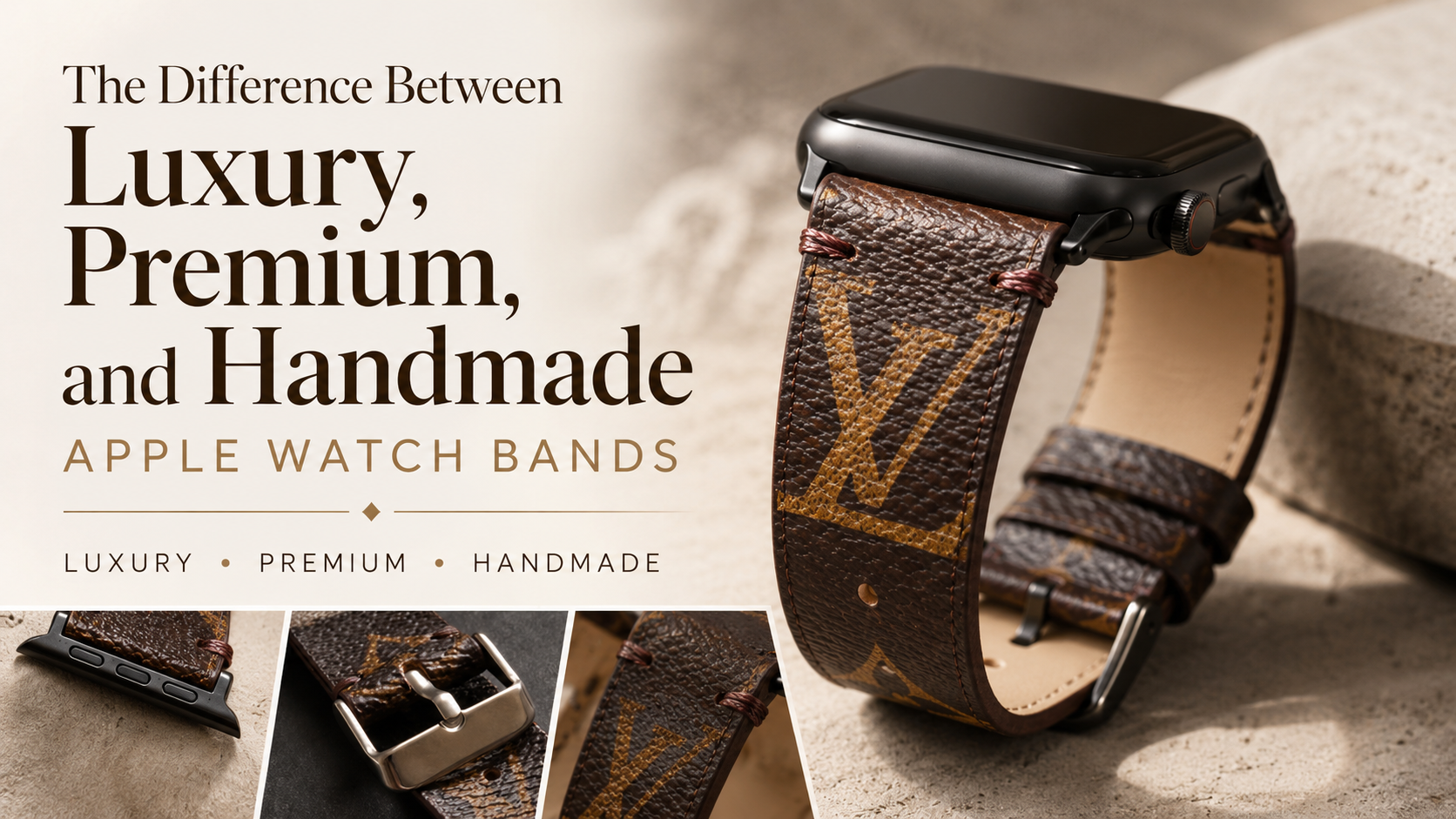
Walk through any online watch accessories store and you’ll see these three words thrown around constantly: luxury, premium, and handmade. They get tossed onto product titles almost interchangeably, as if they all mean the same thing. They don’t. And if you’re spending real money on an Apple Watch band, it’s worth understanding what actually separates these categories — because the difference shows up on your wrist, not just in the price tag.
“Premium” Is Often Just Marketing Language
Let’s start with the most overused word in the bunch. “Premium” technically just means a step above standard, but in practice, it’s become a catch-all label slapped on anything priced slightly higher than the cheapest option available. A premium silicone band might just mean slightly thicker silicone. A premium leather band might mean it’s made from a higher grade of cowhide instead of bonded scraps.
That’s not necessarily a bad thing — premium can still mean a noticeably better product. But it’s a relative term, not a guarantee. Two stores can both call their bands “premium” while one is genuinely well-made and the other is barely distinguishable from a budget option with better packaging.
Luxury Is About Material, Heritage, and Recognition
Luxury operates differently. It’s tied to brand heritage, material sourcing, and a level of recognition that premium products simply don’t have. This is the category where designer names come in — think monogram canvas, signature hardware, and design language that’s instantly recognizable from across a room.
This is exactly where something like a Louis Vuitton Apple Watch band fits in. The appeal isn’t just that it’s expensive — it’s that the materials and design carry decades of brand history with them. When people see an LV Apple Watch band, they’re not just registering “nice strap.” They’re registering a specific aesthetic and a level of craftsmanship that’s been refined over a long period of time.
But here’s where it gets interesting: luxury doesn’t always mean brand-new. In fact, some of the most compelling luxury Apple Watch bands on the market right now are upcycled — built from pieces of designer goods that already existed, repurposed into something new. An upcycled LV Apple Watch band, for instance, still carries that same monogram canvas and recognizable design, but it arrives with a story instead of a fresh-off-the-shelf sameness.
Handmade Means Something Different Entirely
Handmade isn’t about brand or price point at all — it’s about process. A handmade band is one where an actual person, not a machine, is doing the cutting, stitching, shaping, and finishing. That distinction matters more than people realize.
Machine-manufactured bands are consistent, sure, but consistency isn’t the same as quality. A machine doesn’t know when a piece of leather has a weak spot it should avoid, or when stitching needs to be reinforced around a stress point. A skilled hand does. That’s part of why handmade goods, even when made from less “prestigious” materials, often outlast mass-produced luxury items that were assembled on a production line.
This is exactly the appeal behind upcycled designer pieces like the Apple Watch Band Repurposed Classic LV Monogram. These aren’t stamped out in bulk. Someone is taking an existing piece of LV material — already proven through years of real-world use — and reshaping it by hand into a band that fits an Apple Watch. That combination of handmade attention and pre-tested material is genuinely hard to find anywhere else in this market.
Where the Three Categories Overlap (and Where They Don’t)
Here’s the part that trips people up: these three categories aren’t mutually exclusive, but they’re also not the same thing.
You can have a premium band that’s mass-produced and not handmade at all — think a well-built silicone sport band from a reputable accessory brand. You can have a luxury band that’s also mass-produced, made on a factory line using designer-branded materials, with no individual craftsperson involved at any step. And you can have a handmade band that has nothing to do with luxury branding whatsoever, like a custom leather strap from a local artisan using unbranded leather.
The rare overlap — luxury, premium, and handmade all at once — tends to show up specifically in the repurposed designer goods space. Take something like the Apple Watch Band Repurposed Classic LV Monogram Eclipse Graphite. It checks the luxury box because of the LV monogram and material pedigree. It checks the premium box because the materials used are objectively higher grade than synthetic alternatives. And it checks the handmade box because converting an existing leather good into a properly fitted, functional watch band isn’t something you can automate — it takes someone with real skill, working piece by piece.
Why This Matters When You’re Actually Shopping
Knowing the difference between these terms changes how you shop. If a band is labeled “premium,” ask what specifically makes it premium — material weight, stitching quality, hardware finish. If it’s labeled “luxury,” look past the name and check whether the materials and construction actually back up that label, or if you’re just paying for a logo printed on synthetic leather. If it’s labeled “handmade,” look for evidence: slight natural variations, hand-finished edges, stitching that isn’t machine-perfect in a way that feels almost too uniform.
When you’re browsing something like an Apple Watch Band Classic LV Monogram option, these three questions are worth running through before you buy: Is the material genuinely upscale, or just branded? Was real craftsmanship involved in putting it together? And is the price actually reflecting all of that, or just the name attached to it?
Why Upcycled Designer Bands Hit All Three Marks
If there’s one category that consistently satisfies luxury, premium, and handmade criteria at the same time, it’s upcycled designer Apple Watch bands. They start with materials that already carry luxury-level pedigree. They’re reworked by hand, piece by piece, rather than churned out on an assembly line. And because the source material has already proven itself through years of use, the end result tends to outperform a lot of brand-new “premium” alternatives that haven’t been tested by time at all.
That’s really the throughline connecting all three terms: real quality shows up in the details, not the label. A band can call itself luxury, premium, or handmade — but the only way to know if that’s actually true is to look closely at the material, the construction, and the story behind it.
Final Thoughts
Luxury, premium, and handmade aren’t interchangeable buzzwords, even though they’re often used that way. Luxury speaks to material pedigree and brand recognition. Premium is a relative quality marker that needs context. Handmade is about process and human craftsmanship. The bands that manage to genuinely deliver on all three — like upcycled designer pieces built from real LV monogram materials — tend to be the ones worth paying attention to.
If you want to see what that combination actually looks like in practice, it’s worth browsing the current selection at Shop Himelhochs, where repurposed LV monogram bands bring luxury materials, premium construction, and handmade craftsmanship together in one piece.












Post Comment