Asbestos Soil Remediation Process Explained Safe Removal and Site Restoration Methods
Asbestos in soil is one of those issues most people never think about until it suddenly becomes real. It’s often hidden, sitting quietly beneath what looks like normal ground—until construction starts, a garden is dug, or an old structure is removed. Then it shows up unexpectedly and changes the entire plan for a site.
The challenge with asbestos in soil is that you usually can’t see it. Unlike visible waste or obvious contamination, it can exist in tiny fragments mixed into dirt, rubble, or old fill material. That’s what makes it tricky and also why the remediation process has to be so careful, structured, and methodical.
But the good news is this: when it’s handled properly, contaminated land can be made safe again. The process is well established, and it follows a clear path from identification to final restoration.
How asbestos ends up in soil and why it still matters today
To understand remediation, it helps to understand the origin of the problem. Asbestos was widely used in construction for decades because it was strong, heat-resistant, and inexpensive. It appeared in roofing sheets, insulation, cement products, fencing, pipes, and even sheds in residential backyards.
When buildings were demolished or renovated—especially before modern waste regulations—materials containing asbestos were sometimes buried on-site or dumped into nearby land. Over time, those materials broke down and became part of the soil.
For example, imagine an old industrial workshop that was knocked down 40 years ago. The roofing sheets might have been pushed into a pit and covered with soil. Or think about a rural property where old outbuildings were dismantled and the waste was simply buried out of sight. Today, those places may look completely normal on the surface.
The problem arises when that soil is disturbed. Digging, drilling, landscaping, or construction can bring buried asbestos fragments back to the surface. Once exposed, fibers can become airborne, which is when the risk becomes serious.
That’s why asbestos soil remediation is still so important today. It’s not just about cleaning up old mistakes—it’s about making land safe for future use.
The safe removal process and how professionals manage risk
The remediation process always begins with investigation. Before anything is dug up, specialists carry out site inspections and collect soil samples. These samples are sent to laboratories to confirm whether asbestos is present and to what extent. This step is crucial because contamination is often uneven—some areas may be clean while others are affected.
Once results are known, a detailed remediation plan is created. This plan is like a roadmap for the entire job. It outlines how soil will be handled, what safety controls are needed, and how waste will be transported and disposed of.
In real-world practice, this is similar to planning a major renovation where you first inspect the structure before removing walls. You don’t just start digging—you need to know what’s inside the ground.
During excavation, dust control is one of the top priorities. Water is often sprayed onto the soil to keep it damp, which helps prevent fibers from becoming airborne. In some cases, barriers or sealed work zones are set up around the site to isolate the area from surrounding activity.
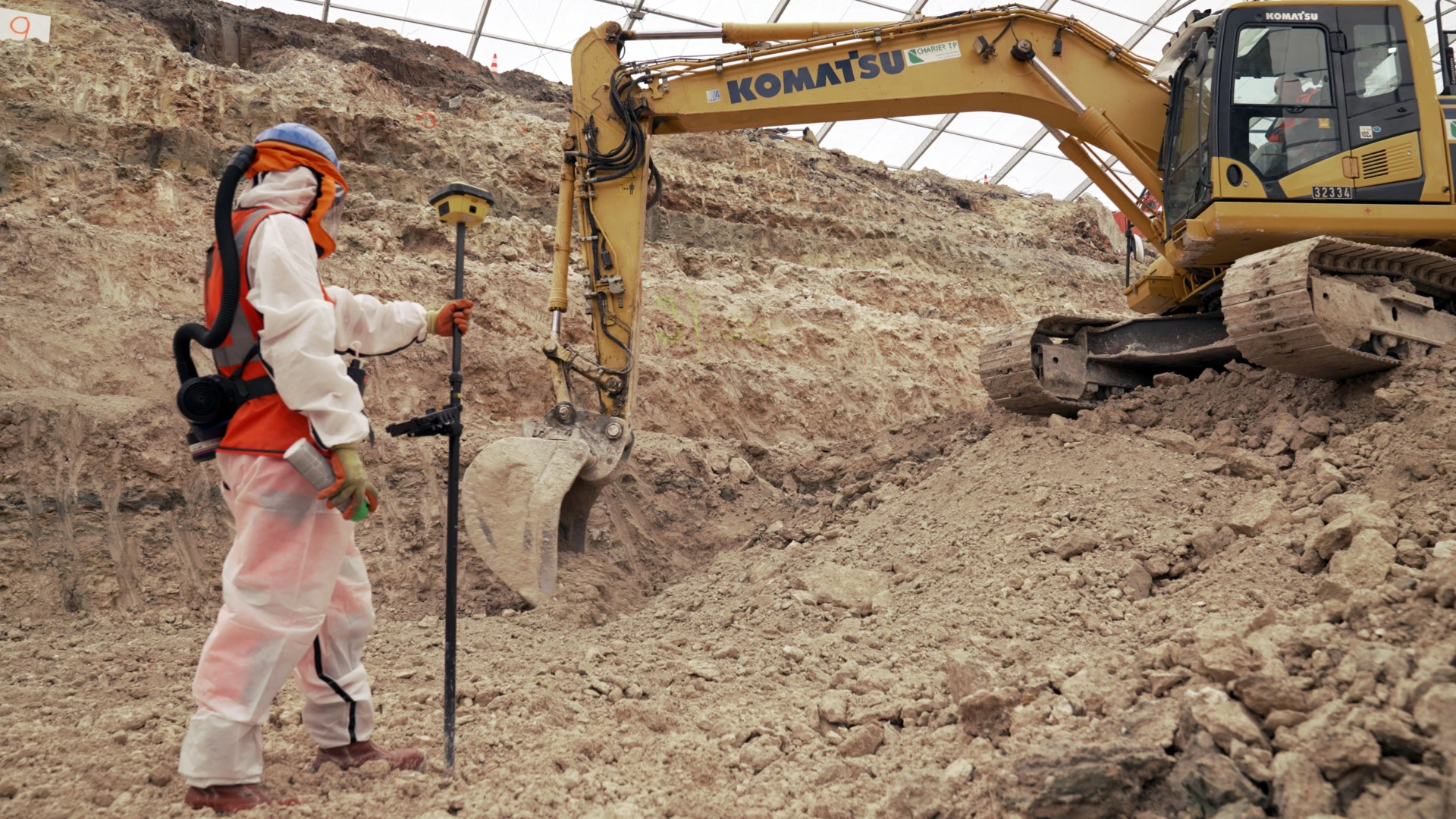
Workers wear protective equipment, including respirators and disposable suits, because even minimal exposure must be avoided. The contaminated soil is carefully removed and placed into sealed containers or heavy-duty wrapping to prevent leakage during transport.
That material is then taken to licensed facilities designed specifically for hazardous waste disposal. It is not handled like normal construction debris—it follows strict environmental and safety regulations.
Air monitoring is often used throughout the process, especially on larger or more sensitive sites. This ensures that fibers are not escaping into nearby areas while work is underway.
At a practical level, this entire process is about control. Every step is designed to reduce the chance of disturbance or exposure, even in unpredictable conditions like wind, rain, or uneven soil layers.
This structured approach is what allows projects in residential areas, industrial zones, and public infrastructure sites to move forward safely, even when contamination is present.
For people trying to understand how this system works in practice, resources such as link help explain how these procedures are structured and applied across different types of real-world projects.
Site restoration, verification, and what happens after cleanup
Once contaminated soil has been removed, the focus shifts to restoration. This is where the land is returned to a usable condition, whether for construction, landscaping, or natural recovery.
Fresh clean soil is often brought in to replace what was removed. The ground is leveled, compacted if necessary, and prepared for its next use. In construction projects, this might mean preparing a foundation. In residential settings, it could simply mean restoring a backyard so it is safe for everyday activities again.
But before the site is officially considered safe, it must go through clearance testing. Independent assessors collect new soil samples and test them to ensure that asbestos levels are within safe regulatory limits. This step is essential because it confirms that the remediation work was successful.
It’s similar to a final inspection after repairs—everything might look fine visually, but testing provides certainty.
In some situations, full removal of contaminated soil may not be practical, especially in large or deeply affected sites. In those cases, an alternative method called capping may be used. This involves covering the contaminated area with a clean layer of soil or engineered material to prevent exposure.
Think of it like placing a protective barrier over something that cannot be fully removed but can be safely isolated.
Once a site passes clearance, it can be repurposed in many ways. Former industrial land may become residential developments. Old commercial zones may be transformed into parks, schools, or business spaces. Even small residential properties regain their full usability, allowing families to safely use their land again.
The transformation is often more dramatic than people expect. A site that once required strict hazard controls can eventually become an ordinary, safe space used every day without concern.
Why this process matters beyond just cleanup
Asbestos soil remediation isn’t just about removing a hazard—it’s about restoring confidence in the land itself. Whether it’s a small backyard or a large development site, the goal is the same: make the ground safe for future use without hidden risks.
What makes this process important is its long-term impact. Once completed properly, it allows communities to build, grow, and reuse land that might otherwise be considered unsafe or unusable. It also prevents accidental exposure that could happen years later if contamination were left untreated.
In many ways, it’s a quiet but essential part of modern development. Most people never see it happening, but it plays a big role in ensuring that the spaces we live and work in are safe from hidden environmental risks.
When handled correctly, contaminated soil doesn’t have to be a permanent problem. With careful planning, controlled removal, and thorough restoration, it becomes just another piece of land ready for a new purpose.














Post Comment