A Complete Glossary of Peptide Research Terms
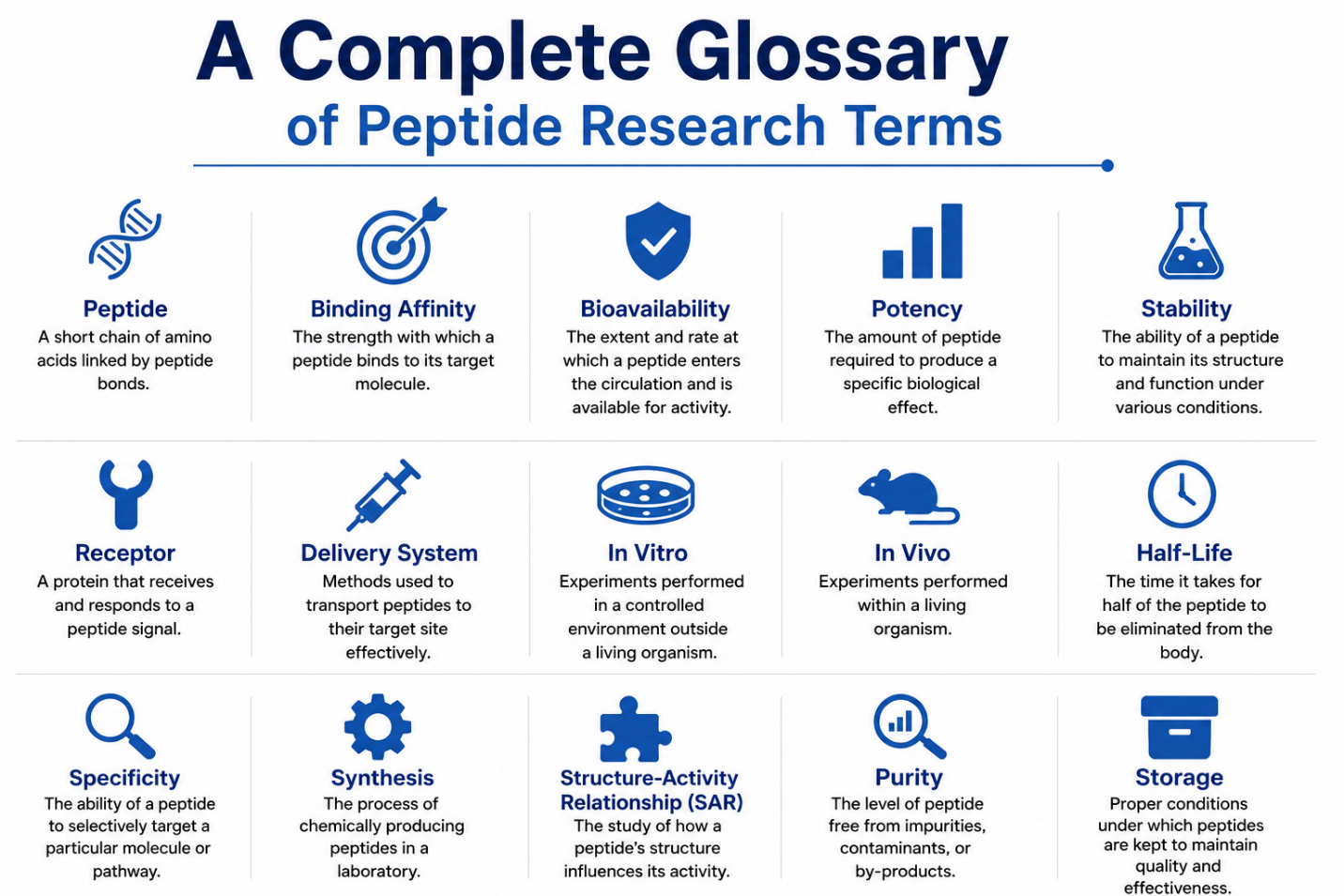
Peptide research has become one of the fastest-growing areas of modern biotechnology, molecular biology, and pharmaceutical science. As more researchers, students, and laboratory professionals enter this field, they often encounter technical terminology that can be difficult to understand.
At Core Power Peptides, we believe that understanding peptide science starts with learning its language. Whether you’re new to peptide research or simply looking for a quick reference, this glossary explains many of the most common terms you’ll encounter when reading research papers, laboratory reports, Certificates of Analysis (COAs), and product specifications.
Amino Acid
An amino acid is a small organic molecule that serves as the building block of peptides and proteins. Different amino acids combine in specific sequences to form peptide chains, and the order of these amino acids determines a peptide’s structure and biological properties.
Analytical Testing
Analytical testing refers to laboratory methods used to verify the identity, purity, and quality of research peptides. Common techniques include High-Performance Liquid Chromatography (HPLC) and Mass Spectrometry (MS).
Batch Number
A batch number, sometimes called a lot number, is a unique identifier assigned to a specific production run of a peptide. It allows manufacturers and researchers to trace manufacturing records, testing results, and quality documentation for that particular batch.
Bioavailability
Bioavailability describes the proportion of a substance that reaches systemic circulation after administration. While this term is frequently used in pharmacology, researchers may encounter it in scientific literature discussing peptide-related investigations.
Biomarker
A biomarker is a measurable biological characteristic used in scientific research to study normal biological processes, disease mechanisms, or responses within experimental settings.
Cell Signaling
Cell signaling is the process by which cells communicate using chemical messengers. Many naturally occurring peptides participate in these signaling pathways, making them valuable tools for biological research.
Certificate of Analysis (COA)
A Certificate of Analysis (COA) is a quality assurance document that provides batch-specific analytical information about a research peptide. It often includes purity results, batch numbers, testing methods, manufacturing details, and quality approval.
Chromatogram
A chromatogram is the graphical output generated during High-Performance Liquid Chromatography (HPLC). Researchers use chromatograms to evaluate the purity of peptide samples by identifying individual compounds present in the mixture.
Endocrinology
Endocrinology is the scientific study of hormones and the glands that produce them. Many peptide hormones are studied within this field because they regulate important biological processes.
Growth Factors
Growth factors are naturally occurring signaling molecules that influence cellular communication and biological activity. Researchers often study their interactions alongside peptides to better understand molecular pathways.
High-Performance Liquid Chromatography (HPLC)
HPLC is one of the most widely used analytical techniques in peptide research. It separates compounds within a sample to evaluate purity and identify impurities. High-quality peptide suppliers often include HPLC results in their Certificates of Analysis.
Impurity
An impurity is any substance present in a peptide sample that is not part of the intended peptide. Minimizing impurities is important because they may influence laboratory experiments and reduce experimental consistency.
Laboratory Grade
Laboratory-grade products are manufactured specifically for scientific investigations. Research-grade peptides are produced under controlled conditions to support laboratory studies rather than consumer use.
Lyophilization
Lyophilization, also known as freeze-drying, is a manufacturing process that removes water from peptides to improve stability during storage and transportation. Many research peptides are supplied as lyophilized powders.
Mass Spectrometry (MS)
Mass Spectrometry is an analytical technique used to determine the molecular weight and identity of a peptide. It helps confirm that the synthesized product matches its intended molecular structure.
Molecular Biology
Molecular biology is the scientific study of biological processes at the molecular level. Researchers use peptides extensively to investigate protein interactions, gene regulation, and cellular communication.
Molecular Weight
Molecular weight represents the combined mass of all atoms within a peptide molecule. It is commonly reported in product specifications and confirmed through mass spectrometry.
Peptide
A peptide is a short chain of amino acids connected by peptide bonds. Peptides occur naturally in living organisms and can also be synthesized in laboratories for scientific research.
Peptide Bond
A peptide bond is the chemical bond that links one amino acid to another, forming a peptide chain.
Peptide Sequence
The peptide sequence refers to the specific order of amino acids within a peptide. Even small changes in the sequence can significantly alter the peptide’s biological properties.
Peptide Synthesis
Peptide synthesis is the laboratory process used to manufacture peptides with precise amino acid sequences. Modern synthesis techniques allow researchers to produce highly pure and consistent research peptides.
Purity
Purity describes the percentage of a sample consisting of the intended peptide. High-purity peptides help reduce unwanted compounds that could interfere with laboratory research.
Quality Control (QC)
1: Quality Control (QC) consists of procedures used during manufacturing to ensure research peptides meet established quality standards before release.
Quality Assurance (QA)
Quality Assurance (QA) involves the broader systems and processes designed to maintain consistent manufacturing quality across all production batches.
Receptor
A receptor is a specialized protein that receives signals from molecules such as peptides, hormones, or neurotransmitters. Researchers study peptide-receptor interactions to better understand biological signaling.
Regenerative Medicine
Regenerative medicine is an area of scientific research focused on understanding tissue biology, cellular repair mechanisms, and biological regeneration.
Research Peptide
A research peptide is a laboratory-manufactured peptide intended exclusively for scientific investigation. These products are not intended for human consumption and are used to support biological research.
Solid-Phase Peptide Synthesis (SPPS)
SPPS is the most common method used to manufacture synthetic peptides. This technique allows amino acids to be assembled one at a time while attached to a solid support, resulting in highly controlled peptide production.
Stability
Stability refers to a peptide’s ability to maintain its chemical structure and quality over time under recommended storage conditions.
Traceability
Traceability is the ability to track a research peptide from manufacturing through testing, packaging, and distribution using documentation such as batch numbers and Certificates of Analysis.
Conclusion
Understanding peptide terminology makes it easier to read scientific literature, evaluate research products, and communicate effectively within laboratory environments. From amino acids and peptide synthesis to HPLC testing and Certificates of Analysis, these terms form the foundation of modern peptide science.
As peptide research continues to grow, having a solid understanding of these concepts will help researchers, students, and laboratory professionals interpret scientific information with greater confidence. Combined with high-quality research materials and transparent documentation, this knowledge supports more informed decisions and contributes to reliable scientific investigations.
Disclaimer: Research peptides are intended for laboratory research purposes only. They are not intended for human consumption, veterinary use, diagnosis, treatment, cure, or prevention of any disease. All research should be conducted by qualified professionals following applicable regulations and laboratory safety standards.














Post Comment